
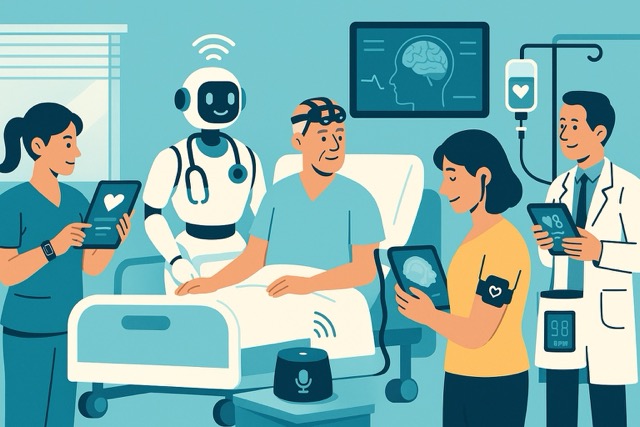
If you’re focused on improving patient outcomes or advancing your facility’s clinical capabilities, the latest wave of medical innovation offers practical tools—not just theories. From AI-driven hospital support systems to wearable diagnostics and personalized therapies, these technologies are already changing how you deliver care. In this article, you’ll explore six of the most impactful breakthroughs that are actively reshaping the way providers, clinicians, and institutions approach diagnostics, treatment, monitoring, and recovery. Whether you’re managing a health system or working in direct patient care, understanding these developments equips you to lead with better tools, clearer data, and smarter strategies.
1. Brain-Computer Interfaces: Giving Communication Back to Patients
One of the most remarkable advances in patient-centered care is the ability to restore communication in individuals with neurological impairments. You’re now seeing brain-computer interfaces (BCIs) move beyond experimental trials and enter clinical relevance. Neuralink’s FDA-designated “breakthrough” device allows patients with conditions like ALS or severe paralysis to type messages using only their thoughts. This isn’t theoretical—it’s real progress in restoring autonomy.
As a healthcare provider or caregiver, being able to offer communication options through BCIs changes the treatment outlook. It doesn’t just improve emotional well-being—it enhances care coordination, reduces frustration, and brings the patient back into decision-making. These tools are also likely to evolve into platforms for controlling assistive technology, broadening their utility in rehabilitation settings.
2. Immunotherapy: Redefining How You Treat Cancer
Traditional cancer care relies heavily on surgery, chemotherapy, and radiation—interventions that come with high costs, physical tolls, and long recovery timelines. Immunotherapy is now giving you another option, and it’s showing real results. One of the most cited studies this year involved dostarlimab, an anti-PD-1 monoclonal antibody. In a clinical trial with patients suffering from rectal cancer, the drug achieved 100% remission in a sample group—without surgery or radiation.
If you’re part of an oncology care team or work in a hospital that provides outpatient chemotherapy, this represents a shift in treatment plans. Immunotherapy offers a more personalized, targeted approach that works with the patient’s immune system rather than against their body. It also opens opportunities for less invasive outpatient care, faster recoveries, and better quality of life during treatment.
3. Smart Insoles: New Tools for Neurological Risk Detection
Early signs of cognitive decline often show up in subtle physical behaviors—changes you might miss during a routine exam. That’s why smart insoles are now gaining attention. These wearables are built with embedded sensors that track gait and pressure distribution. But their real power lies in the data. Connected to smartphone apps, they detect micro-patterns linked to early-stage neurological disorders like dementia and Parkinson’s.
When used in primary care, geriatric medicine, or physical therapy, these devices help you detect problems earlier and initiate interventions before symptoms escalate. For patients at risk of falls or balance issues, smart insoles also provide preventive insight that could reduce hospital admissions. As the devices become more affordable and scalable, they’re becoming valuable tools in remote patient monitoring programs.
4. Live Human Brain Tissue: Real-Time Alzheimer’s Research
Studying degenerative brain diseases has always been difficult due to limited access to functioning human tissue. That’s changing. This year, researchers successfully kept living brain tissue alive in lab conditions long enough to study how Alzheimer’s disease disrupts synaptic activity in real time. Instead of modeling the disease on animals or with simulations, researchers are now working directly with live human samples.
If you’re working in neurology, neuroscience research, or clinical trials, this leap enables more accurate drug testing and deeper understanding of disease progression. While the application is still in research phases, it signals a future where Alzheimer’s medications could be developed based on real-time data from actual patients—something that hasn’t been possible before.
5. AI Nurses: Meeting Staffing Shortages and Improving Care Delivery
You’ve likely felt the pressure of staffing shortages, rising patient loads, and growing administrative demands. AI-powered virtual nurses are starting to bridge that gap. These tools are now being deployed to manage patient FAQs, schedule reminders, conduct triage assessments, and monitor vitals remotely. Far from replacing your team, AI nurses free up time so licensed professionals can focus on tasks that require human judgment and care.
For hospitals and clinics already using electronic health records (EHRs), integrating AI assistants into existing platforms is becoming easier. These systems can flag anomalies, send alerts, and manage follow-up care without requiring full-time staff. Used wisely, AI support tools allow you to deliver more consistent care and reduce provider burnout across teams.
6. Smart Hospitals: Connected Systems That Predict, Alert, and Empower
Imagine a facility where sepsis alerts trigger in real time, patients adjust their room temperature via mobile app, and medication adherence is tracked passively. That’s not futuristic—it’s happening now in pilot programs worldwide. Smart hospitals leverage AI, IoT, and machine learning to automate and optimize both patient and provider experiences.
If you’re in hospital operations or clinical leadership, smart hospital tools offer measurable improvements. You can reduce emergency response times, streamline patient intake, and improve room turnover. Clinical staff benefit from reduced documentation burdens and real-time support. At the patient level, smart rooms and connected devices improve satisfaction, reduce complications, and support personalized recovery protocols. This is where the future of care delivery is heading—and it’s closer than you think.
Top Medical Innovations Changing Care
- BCIs restore communication in paralyzed patients
- Immunotherapy offers non-invasive cancer remission
- Smart insoles detect early neurological decline
- Live brain tissue advances Alzheimer’s research
- AI nurses reduce hospital workload
- Smart hospitals improve safety and satisfaction
Innovation That Delivers Measurable Impact
The breakthroughs you’ve just reviewed aren’t hype—they’re real tools improving real lives. Whether it’s restoring speech to someone who can’t talk, identifying disease risks early, or making hospital workflows smarter, these innovations offer results you can use right now. If you’re responsible for patient care, technology strategy, or system-level transformation, integrating these advances isn’t optional—it’s how you lead. As more of these tools enter clinical use, your ability to adapt will determine whether you’re just reacting to change or using it to deliver next-level outcomes.
Explore more about international scientific insights and potentially related topics on my Weebly site.

Maurizio Chiriva Internati (DBSc, PhDs) is a cancer immunologist and biotech entrepreneur with 20+ years in immuno-oncology. Co-founder and former CEO of Kiromic BioPharma (NASDAQ: KRBP), he has led AI-driven target discovery and translational programs, and has served on faculty at MD Anderson and Texas Tech.