
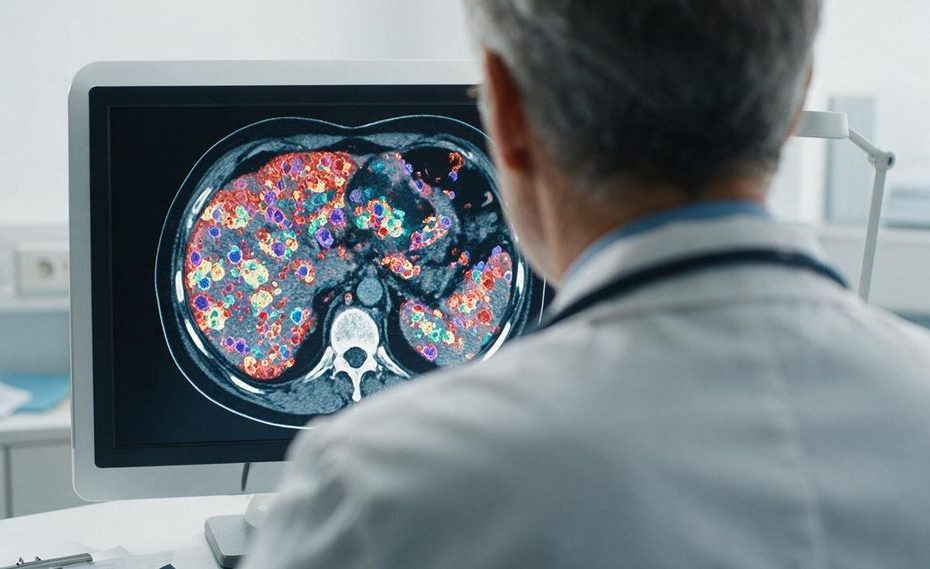
One cancer can respond differently because tumor heterogeneity means its cells and regions aren’t biologically identical. Some cells carry different mutations, grow at different rates, or occupy areas where a treatment penetrates and works less effectively.
This diversity explains why one tumor site can shrink as another continues growing, or why an effective medication can stop controlling cancer later. Understanding these differences helps you make sense of biopsies, treatment resistance, repeat testing, and newer monitoring methods. It also explains why cancer treatment often requires more than one strategy.
What Is Tumor Heterogeneity?
Tumor heterogeneity is the presence of cancer cells with different biological characteristics within one tumor or across tumors. Those differences can involve cell shape, gene expression, metabolism, growth rate, movement, and the ability to spread.
A tumor may look like one solid mass on a scan, but it can behave more like a living ecosystem. Groups of cancer cells, known as subclones, can develop separate traits as they divide. One group may grow rapidly, another may remain less active, and another may carry a change that lets it survive a particular drug.
This helps explain why a treatment chosen from one biopsy result may control much of the cancer without eliminating every cell. The target identified in the biopsy may be present in a large portion of the tumor but absent from a smaller subclone. If that smaller group survives, it can become a larger part of the cancer later.
What Are The Two Main Types Of Tumor Heterogeneity?
The two main types are intratumoral heterogeneity, which occurs within a single tumor, and intertumoral heterogeneity, which describes differences between separate tumors. Recognizing the distinction helps you understand why cancers with the same diagnostic name don’t always respond in the same way.
Intratumoral heterogeneity can exist between neighboring areas of one mass. Cells near the center may receive less oxygen and fewer nutrients than cells near the outer edge. Separate regions may also contain different mutations, growth patterns, or levels of the molecule targeted by treatment.
Intertumoral heterogeneity can refer to differences between cancers in separate people or between separate tumors in one person. A primary tumor and a distant tumor site may share a common origin but develop distinct biological features. That means a medication that controls the primary site may have less effect on another site.
Why Can One Tumor Shrink In One Area But Grow In Another?
Different areas can respond differently because cancer varies by location and changes with time. These patterns are called spatial heterogeneity and temporal heterogeneity.
Spatial heterogeneity refers to differences across physical locations. A primary tumor, a nearby tumor site, and a distant tumor site can contain related but nonidentical cell populations. Blood supply, oxygen levels, acidity, immune cell activity, and surrounding tissue can also differ from one location to another, changing the amount of medication that reaches the cells.
Temporal heterogeneity describes changes that occur as cancer develops or receives treatment. A biopsy records the characteristics of the sampled cells at one point in time. Months later, the cancer may contain a different mix of subclones because sensitive cells were removed, resistant cells survived, or new genetic changes appeared.
What Causes Tumor Heterogeneity?
Tumor heterogeneity develops through genetic instability, repeated cell division, clonal evolution, and differences in the tumor’s surroundings. These forces create populations of cells that share an origin but don’t behave identically.
Cancer cells accumulate genetic changes as they divide. Some changes promote cell growth or survival and are often called driver mutations. Others, known as passenger mutations, may not directly drive the cancer but still add to the genetic variation inside the tumor.
Clonal evolution occurs when a cell with a survival advantage produces more descendants than competing cells. Treatment can influence this process by removing sensitive populations and leaving resistant ones behind. The surviving clone can expand, changing the biological makeup of the tumor and its response to the same medication.
How Does The Tumor Microenvironment Change Treatment Response?
The tumor microenvironment changes treatment response by affecting cancer cell behavior and drug access. It includes blood vessels, immune cells, connective tissue, oxygen levels, nutrients, acidity, and other conditions around the cancer cells.
Areas with poor blood supply may receive less medication than well-supplied regions. Low-oxygen areas can also contain cells that divide more slowly. Since many chemotherapy drugs work best against actively dividing cells, slower growth can make these populations harder to eliminate.
The surrounding tissue can create physical and chemical barriers that affect drug penetration. Immune cell activity may vary across different parts of the same mass as well. Your treatment response can depend on the tumor cells themselves, the conditions around them, and whether enough medication reaches each area.
How Does Tumor Heterogeneity Cause Drug Resistance?
Tumor heterogeneity causes resistance when a treatment kills sensitive cells but spares cells with protective traits. Those surviving cells can multiply until the cancer begins growing again.
Primary resistance occurs when the cancer doesn’t respond adequately from the start. A resistant population may already be present before treatment begins, or the selected drug may not target enough of the tumor’s active biological pathways. In that situation, scans may show limited shrinkage or continued growth during early treatment.
Acquired resistance develops after an initial response. Treatment reduces the sensitive populations, giving resistant subclones more space and resources to expand. The medication hasn’t necessarily lost all biological activity; the remaining cancer has changed, or a previously minor population has become dominant.
This is one reason clinicians may change medications, combine treatment types, or test the cancer again after progression. Updated testing can identify newly dominant features that weren’t detected earlier. Treatment planning then focuses on the cancer that exists now rather than relying only on its earlier profile.
Is A Single Biopsy Enough To Understand A Tumor?
A single biopsy can provide valuable diagnostic and molecular information, but it may not represent every part of a heterogeneous cancer. It samples a limited amount of tissue from one location at one time.
If the sampled region contains a targetable mutation, testing can guide treatment toward that feature. Another region may contain fewer cells with the same target or may rely on a separate growth mechanism. A small resistant subclone can also be missed when it isn’t present in the tissue removed for analysis.
Repeat tissue sampling can sometimes show how the cancer has changed, but another biopsy isn’t always practical. The location may be difficult to reach, the procedure may carry medical risks, or the collected sample may be too small for every planned test. Clinicians weigh the expected value of new information against the burden and safety of the procedure.
Can Liquid Biopsies And Combination Treatments Help?
Liquid biopsies and combination treatments can help address parts of the heterogeneity problem, but they don’t remove every limitation. Their value depends on the cancer type, the amount of detectable tumor material, available tests, and the treatment targets involved.
A liquid biopsy analyzes tumor-related material found in blood, often circulating tumor DNA. Since this material can be released from multiple tumor sites, the blood sample may reveal changes that weren’t captured by one tissue biopsy. It can also support repeated testing without requiring a new tissue procedure every time.
Liquid biopsy results must still be interpreted carefully. Not every tumor releases enough detectable material into the blood, and a negative result doesn’t always prove that a mutation is absent. Tissue testing can remain necessary for diagnosis, tumor classification, or confirmation of findings.
Combination treatment aims to block more than one cancer pathway or cell population. The goal is to reduce the chance that a resistant subclone survives and becomes dominant. Treatment teams must also compare potential benefits with side effects, since adding therapies can increase the burden on healthy tissue.
What Causes Tumor Heterogeneity?
- Random genetic changes during cell division
- Clonal expansion of cells with survival advantages
- Differences in oxygen, nutrients, acidity, and blood supply
- Selection of resistant cells during treatment
What This Means For Your Treatment Decisions
Tumor heterogeneity explains why cancer can’t always be understood from one scan, one tissue sample, or one early treatment response. A tumor can contain sensitive and resistant cells at the same time, and its biological makeup can shift during therapy. Repeat molecular testing, liquid biopsy, imaging, and treatment changes can help clinicians track those shifts when medically appropriate. Heterogeneity doesn’t guarantee that cancer will return or that treatment will fail, but it does explain why ongoing monitoring matters. When you understand tumor heterogeneity, mixed responses and treatment adjustments become less mysterious and more connected to the biology being measured.
References
- National Cancer Institute: Tumor Heterogeneity
- Nature Reviews Clinical Oncology: Tumour Heterogeneity and Resistance to Cancer Therapies
- Journal of Experimental & Clinical Cancer Research: Liquid Biopsy and Tumor Heterogeneity in Metastatic Solid Tumors
- Cancer Research UK: Why Some Cancers Come Back
- American Cancer Society: How Chemotherapy Drugs Work
- Cleveland Clinic: Liquid Biopsy.

Maurizio Chiriva Internati (DBSc, PhDs) is a cancer immunologist and biotech entrepreneur with 20+ years in immuno-oncology. Co-founder and former CEO of Kiromic BioPharma (NASDAQ: KRBP), he has led AI-driven target discovery and translational programs, and has served on faculty at MD Anderson and Texas Tech.